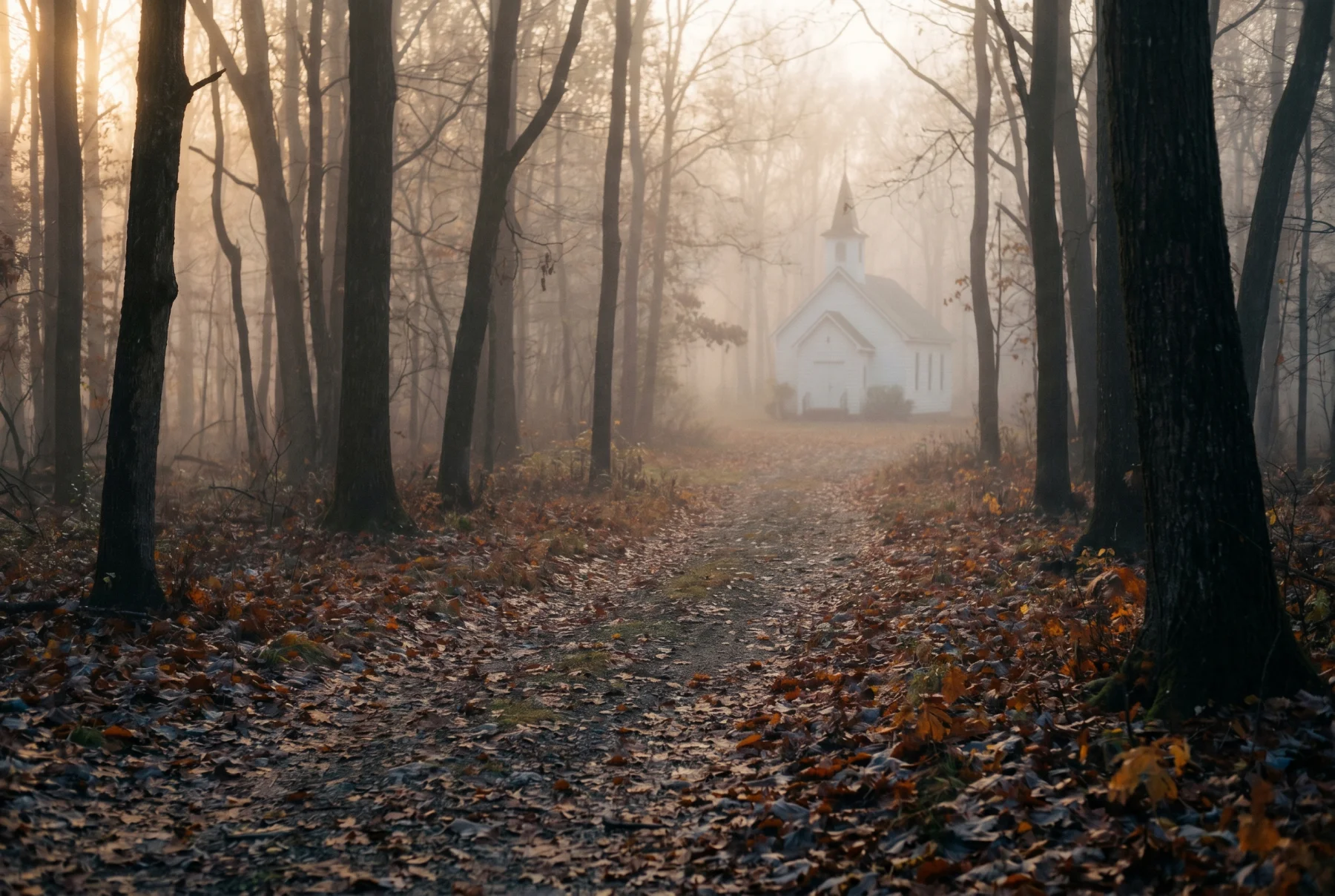
The best celebration of life I have ever been to was held in a community garden in Vermont, in October, six weeks after the death. There were two long tables of food, a guitar that someone picked up and played for twenty minutes, a guestbook on a small lectern that everyone added a sentence to, and a thermos of black coffee that never ran out. It was three hours. No one gave a speech. Everyone left with a small cutting from her favourite hydrangea wrapped in damp newspaper. A year later, the cuttings are in everyone's garden. That is the structure: a place she loved, three things she made well, and something the room could take home.
What follows is seven of these, ranked. The ranking is honest — not by what is easiest, but by what families remember a year later, and by what the deceased would probably have actually wanted. The top of the list is the form that holds longest; the bottom is the form that gives the day. Both have a place. The point is to choose on purpose.
Seven celebration of life ideas, ranked, from #1
Each of these can stand alone, or two or three can be combined into one day. The good celebrations of life are almost always built from specifics — this person, this place, this song — rather than from a generic template. Pick the ones that fit the person.
1. A bespoke memorial book, written and pressed in one copy.
The one thing on this list that outlasts everyone in the room. A short-form literary portrait of the person — thirty-two pages, hardcover, matte-printed — written from a brief that the family supplies. The book is read at the gathering and then kept on the family shelf. A year later, the casseroles are gone and the flowers are dust, and the book is still there. The studio makes them; you can start one from the family's notes about the person, and the journal's piece on what a memorial book actually is gets into the form more carefully.
Why this is #1: every other thing on this list is an event. This is the artefact. It is the object the next generation will inherit. It is also the one form that holds the eulogy, the obituary, and the cards in one place — see also what to write in a sympathy card and how to write a eulogy for the writing that goes into it. It is closer to a short-form memoir than to a scrapbook.
2. A planted tree, or a small grove, at a named nursery.
A memorial tree planted on family land or at a local arboretum is a real, growing thing — a slow form of remembering. Specific places: the Arnold Arboretum's memorial tree program in Boston, the Morton Arboretum's outside Chicago, or local land trusts in most states. Plant a hardwood, not an ornamental: oak, maple, beech. The tree will outlive everyone at the celebration. Skip the cheap-package commercial "memorial forest" sites where you do not get the GPS coordinates of your own tree; pay more, get a named, visitable specimen.
3. A long-table meal at a place that actually mattered to them.
The restaurant where they ate every Friday for forty years, the kitchen of the house they lived in, the picnic table at the lake. Book the whole place if you can. Serve their food — the actual dishes, with the actual recipes. The point is not catering, it is reproduction. The lasagne she made for thirty years, made by her daughter, served at her table, to fifty people. A small printed card at each place setting with one specific about the person works better than any speech.
4. A printed program with the eulogy bound inside.
Not a folded photocopy. A proper printed booklet — sixteen to twenty-four pages, saddle-stitched or perfect-bound, on uncoated cream stock — with the eulogy printed in full, two or three photographs, the order of service, and a short biographical note. Local letterpress and risograph shops will print fifty or a hundred copies for $300–$600. Everyone who attends takes one home. Five years later, people still have them. The piece on how to write a eulogy walks through writing the text that goes inside.
5. An oral-history session, recorded by a real journalist.
Hire a working oral historian or local journalist — StoryCorps, Modern Memoirs, or a freelance public-radio producer — to record two to four hours of interviews with the closest family members, in the weeks before or after the celebration. The recordings are edited into a thirty-to-sixty minute piece. Play a five-minute excerpt at the gathering. Send the full recording to the family afterwards. This is the audio analogue to the memorial book — it preserves voices, which photographs cannot.
6. A memory candle-lighting, with candles from a real maker.
Each guest is given a single beeswax candle as they arrive — Cire Trudon, Trudon's lesser-known American cousin Manufactum, or a small US maker like Big Dipper Wax Works. At the end of the gathering, the room is darkened, and each person lights their candle and says one short sentence about the deceased. The room is in full candlelight for ten minutes. Then everyone takes the candle home and burns it that evening. The ritual is shared in the room; the remembering is private, at home, that night.
7. A photograph series, printed at a real archival lab.
Choose twelve to twenty photographs that span the life. Have them printed properly — silver-gelatin or pigment prints, on cotton rag, by an archival lab (Digital Silver Imaging in Boston, Griffin Editions in New York, or a regional equivalent). Frame six to ten of them simply. Display them on easels at the celebration. Afterwards, give one frame to each immediate family member. The prints will outlast jpegs by a century. The display is the celebration; the gift is the continuity.
How to pick from the list
Two questions. First: did the person care more about people or about objects? If people, lead with #3 (the long-table meal) or #6 (candle-lighting) — the forms that put the room together. If objects, lead with #1 (the memorial book), #4 (the printed program), or #7 (the photograph series) — the forms that make a thing. Second: did the person want to be remembered loudly or quietly? Loud people get a long-table meal with their favourite music played in full; quiet people get a walk in a wooded place with a candle at the end of it. Pick on the person, not on the family's anxiety about hosting.
If you cannot decide, do two of them — typically the artefact (book, tree, prints) and the gathering (meal or candle-lighting). One holds the day; the other holds the year. Skip three or more; the planning becomes the grief and the day stops being about the person. Two on purpose beats five exhausted.
What ties them together
Notice the pattern. Each idea on the list has two parts: something that happens in the room, and something the room takes home. The room is the day; the take-home is the year. A celebration of life that is only the day is, six months later, only a memory. A celebration of life that produces an artefact — a book, a tree, a candle, a print, a recording — is, six months later, a thing on the shelf. The artefact does the long work.
The other pattern: specifics. None of these ideas work if they are generic. The tree has to be a named tree in a named place. The meal has to be at the place that mattered, with the recipe she actually used. The book has to be about this person, written from real specifics, not a template. The vague memorial — "a nice gathering at the church hall" — is the one nobody quite remembers, even six weeks later. The specific one is the one that lasts.
Planning, in practical terms
Pick the date four to eight weeks after the death, so distant family can travel. Pick the place first, then the date — the place dictates the shape. Plan for two to three hours, no more. Open and close the event yourself, briefly. Do not over-program. Leave forty minutes in the middle for unstructured conversation; this is when people who have not seen each other in years actually talk.
Food: serve what the person ate, not what caterers serve at funerals. Music: pick three specific songs they loved, played in full, with the credits read aloud. Memory format: pick one — open mic, or a written guestbook, or a memorial book on a lectern — and stick to it. Trying to do all three exhausts the room. If you are writing notes to people who travelled in, the journal's piece on what to write in a sympathy card covers the reverse case.
What to skip
Skip the long slideshow. Skip the open-mic that runs over forty minutes. Skip the helium balloon release (illegal in many states, and bad for wildlife). Skip the dove release (cruel). Skip the printed prayer cards from the funeral home if you are doing a printed program of your own. Skip the silent auction; this is not a fundraiser.
Working with the funeral director, or not
If you are using a funeral home, the director will offer to coordinate the celebration of life. Decide early whether to accept. The advantage is logistics handled; the disadvantage is a default template that is rarely the right shape for a non-religious gathering. If the person was particular, plan it yourself, with the funeral home handling only the body and the obituary. If the family is exhausted and there is no obvious lead planner, let the director coordinate and supply the specifics — the playlist, the food, the format — yourself. The director can run the day; only the family can shape it.
The honest version
A celebration of life is not a substitute for grief, and the best ones know it. They do not try to be "upbeat" or "a happy day." They are a structured opportunity for a circle of people to be in the same room, around the food the person ate, in the place the person loved, with one specific shared sentence about who the person was. They are quiet. They are short. They leave the room with something to take home.
If you are also writing the obituary or the eulogy, how to write an obituary and how to write a eulogy are the companion pieces; the journal's note on sympathy gifts that are not flowers and on the rainbow bridge, said quietly cover the adjacent forms.
“A celebration of life is one room, one afternoon, three things she made well, and an artefact the room takes home.”