There is a quiet truth about a first birthday that nobody puts on the invitation. The party is not really for the person turning one. The person turning one will not remember the cake, the candle, the wrapped boxes, or the small crowd of adults trying simultaneously to take a photograph and to hold a paper plate. The party is for the parents. It is the first occasion at which they get to look around and notice that the year they were not sure they would survive has, in fact, been survived.
First birthday gift ideas, as a category, mostly ignore this. The standard lists run through the same plush toys, the same wooden push-walkers, the same engraved silver spoons. None of them are wrong; most of them are inert. What follows is an opinionated piece on what the first birthday is really for, what tends to miss, and seven first birthday gift ideas ranked from the strangest to the most worth keeping — with the first one named first.
What the first year actually was
Twelve months. Roughly two thousand nappies. Six hundred and fifty feeds at the high end of the curve. An unknowable number of three-in-the-morning hours spent holding a small person and watching the radiator. A house rearranged twice — once for the arrival, once for the crawling. The first laugh. The first time the baby reached for the parent in a room full of other people. The year was that, and a thousand specifics nobody outside the household watched.
The present calibrated to that year is not the same present as the one calibrated to a twelve-month-old's developmental milestones. The twelve-month-old wants a wooden ring stacker. The parents want an object that names what just happened. The gift that lands at the first birthday is usually one calibrated to both — small enough that the baby can hold it, substantial enough that the parents will set it aside for the shelf.
Why the parents are the audience
The baby will not remember the day. The parents will remember it for the rest of their lives. They will remember who came, who brought what, who said the thing about how the year had gone, who arrived with a small wrapped object that turned out to be a hardcover book with the baby's name on the cover. The audience is the parents; the recipient is the baby; the present that lands is the one that knows the difference.
Calibrated to the milestone, calibrated to the person
There is a useful split between presents calibrated to one years old and presents calibrated to this specific person. The first category — the alphabet puzzle, the Sandra Boynton board book, the soft Liewood blocks — is reliable and welcome. Every household needs them. The second category — a book written about the first year, a piece of art commissioned for the bedroom, a small silver cup — is rarer and lands differently.
Most thoughtful first birthday evenings end up with both. A pile of calibrated-to-the-milestone presents from the broader social circle, and one or two calibrated-to-the-person presents from the people who watched the year up close. The second category is what the parents will photograph and what the baby will inherit. Pairs naturally with the push present form delivered a year earlier — the long-arc gift, given again.
Seven first birthday gift ideas, ranked from #1
Below are seven first birthday gift ideas, ranked from the most personal to the most ceremonial. The first is calibrated to the year just lived; the next six are calibrated to the decade ahead. None are wrong. A strong first birthday usually pairs the first with one of the others.
1. A sundayfawn book about the first year
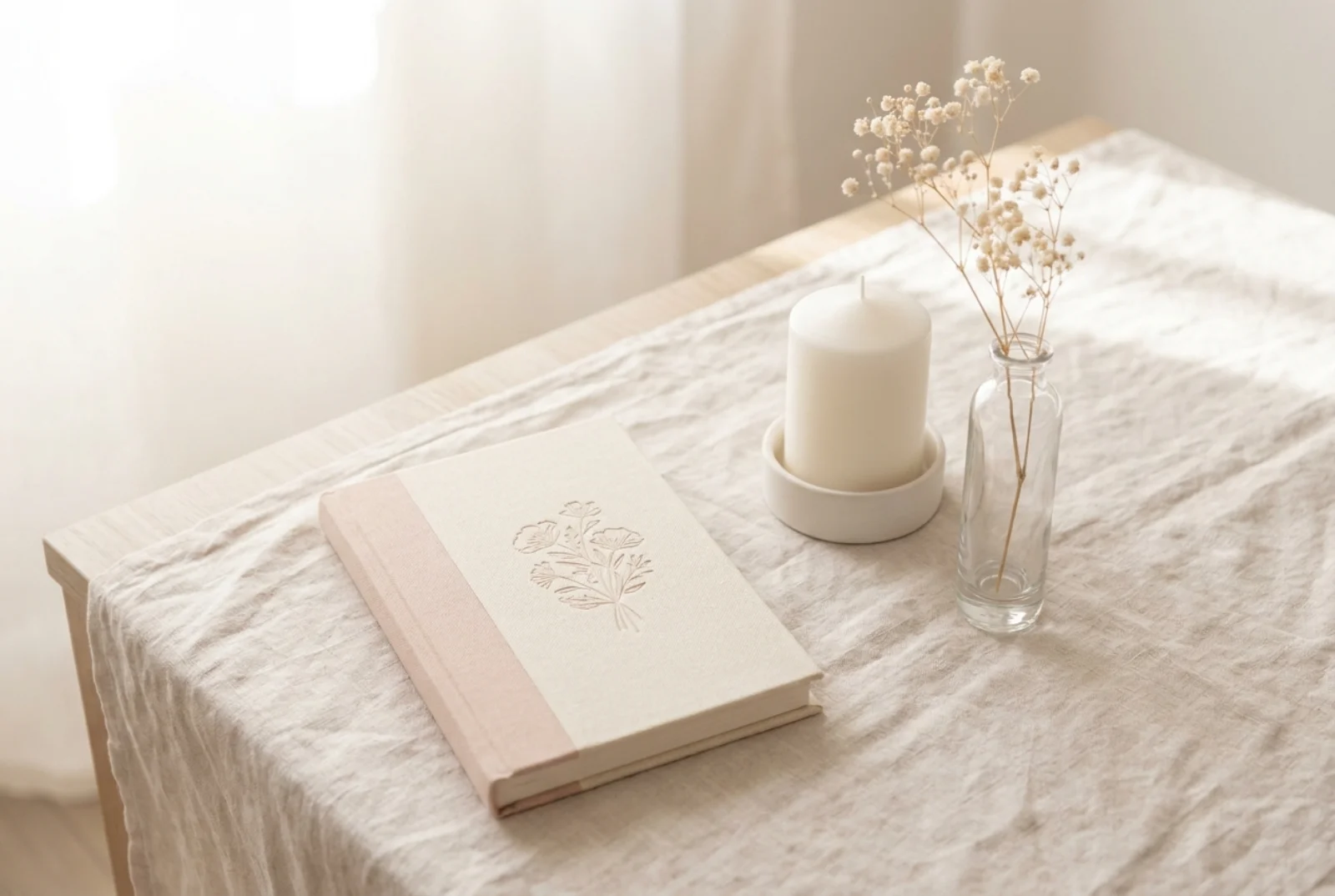
A thirty-two-page hardcover book about the first year, written from a brief the giver supplies: the morning the baby first laughed, the song the parents played at four in the morning, the friend who showed up with soup the bad week, the holiday in the middle of the year when the baby stood up for the first time and nobody quite saw it. Matte-printed on the cover with the baby's name. The book becomes the first object on the bedroom shelf and stays there until the child leaves for university. The form is the same one the press uses for personalized books for babies; the brief is what makes it about this baby.
2. A Maileg mouse in a matchbox bed
The Danish toy company Maileg makes small fabric mice that come in matchbox-style cardboard beds. Each one is hand-finished with linen clothing and a tiny printed pillow. The mice survive thirty years and three siblings; the matchbox bed is, structurally, the first toy box the child will ever own. Costs around forty dollars. Pair with a Maileg mouse house at the third birthday and the family has the beginning of a series. The Bonton catalogue ships them in the United States; the Liewood shop carries the compatible muslin blankets.
3. A piece of Ostheimer wooden figures
Ostheimer — the German workshop in Waldorf, family-run since 1947 — makes hand-carved, made for this one book wooden figures. A single set of farm animals, or a small Noah's ark, costs around two hundred dollars and lasts three generations. The figures are not toys in the contemporary battery-operated sense; they are objects the child will play with for a decade and then place on a shelf as an adult. The aesthetic is calibrated to a room that is not trying to be a nursery.
4. A piece of silver from Mason & Sullivan or Tiffany Junior
A single silver christening cup, a silver rattle, or a silver porringer — engraved with the baby's name and the date of birth. Mason & Sullivan in the United States carries the traditional shapes; Tiffany Junior carries the more contemporary versions. The piece is functional for about three months and ceremonial for the rest of the child's life. It ends up on a shelf, then in a drawer, then on a shelf again when the child is forty and the parents have died. Pairs structurally with a baptism gift for households that mark both.
5. A tree planted at One Tree Planted, in the baby's name
One Tree Planted will plant a tree in a specified forest in the baby's name, with a certificate naming the location, the species, and the date. The cost is modest; the documentation is real. Frame the certificate. Hang it in the bedroom. At ten, the child can be told where the tree is. At twenty, the child can visit. The gift has a half-life of decades and a marginal cost in the low double digits.
6. A starter library, hand-picked
Eight to twelve picture books, chosen specifically — not from a bestseller list. Eric Carle's Brown Bear, Maurice Sendak's Where the Wild Things Are, Margaret Wise Brown's The Runaway Bunny, Sandra Boynton's Moo, Baa, La La La, Beatrix Potter's The Tale of Peter Rabbit, Ezra Jack Keats's The Snowy Day. Presented in a small wooden crate from the Conran Shop. Costs less than two hundred dollars and seeds the bedroom shelf for the next six years. The journal piece on the best books for a 1 year old walks the picks in full.
7. A piece of art commissioned for the bedroom
A small watercolour or pen-and-ink piece, commissioned from a working illustrator on Saatchi Art or a similar platform. Twelve inches by sixteen, framed simply, signed by the maker. The piece is calibrated to the bedroom rather than to the baby, which is the right way around: the room will be the child's for a decade. Pick a subject the household has been near — the tree from the back garden, the dog, the view from the window — rather than a generic nursery scene.
An eighth option — the time capsule letter
A long letter from one or both parents, written on the day of the first birthday, sealed in a wax-pressed envelope, dated, and stored. Opened on the eighteenth birthday. The letter names what the parents thought, that day, looking at the small person who had just survived their first year. Eighteen years from now the document will be the only record of how the parents saw the child on that specific day. Costs paper and time.
What to skip
Anything battery-operated. The flashing musical toy is a calibrated insult to the parents, who will hear it for the next two years and remember exactly who gave it. Anything generic from a major retailer in the under-eight category. The plush from the Pottery Barn nursery aisle has been received and quietly put in the donate pile by enough households to make it a fair generalisation that the form has run its course.
Skip also clothing in anything other than the next size up. The first birthday is the age at which clothing in the current size has already been outgrown by the time it is unwrapped. If clothing is the right register — and it can be — choose from Petit Bateau, Bonpoint, or Konges Slojd, in 18-month or 24-month sizing, in materials calibrated for the next winter rather than the current one.
On the difference a book makes on the shelf
A book about the first year is structurally different from a piece of plush. The plush sits in a basket for two years and ends up in the donate pile when the household moves. The book sits on the bedroom shelf for sixteen years. It gets read at three, when the child can recognise their own name in print. It gets read at six, when the child is curious about the year they cannot remember. It gets read at fourteen, when the child finds it on the shelf during the year they hate everything and pretends not to be interested. The self-reference effect is what makes this work — a small reader returns to a book that names them, again and again. The first birthday is the moment that shelf begins.
“The first birthday is not for the person turning one. It is for the adults who made it through the year — and the present that lands is the one the household will still appreciate at the tenth.”
Writing the brief, in the eleventh month
If a family member or close friend is commissioning the book, the brief is best written in the eleventh month rather than the week before the party. The material is still sharp — the first laugh, the bad week, the friend who came every Tuesday, the moment in the airport that everyone in the family now mentions — and the parents have not yet started to forget the specifics. The studio writes from those particulars. The book ships a few weeks later and arrives in time for the party.
The brief asks for four or five concrete specifics. Not generalisations. The morning in March the baby first held their head up unassisted. The song the parents played repeatedly that nobody else in the family understands. The friend who called every Tuesday. The day the baby stood. The dish the household ate eight nights in a row during the bad fortnight.
- A scene from the first month, when the household was still learning the shape of itself.
- The phrase one parent now uses without noticing that they did not use before.
- The friend, the meal, or the song that recurred across the year.
- The day the baby laughed, or stood, or said the first word.
- What changed about the household, in the giver's view, between the first month and the twelfth.
On giving it
The best moment is not the cake. The cake is a public event with photographs and a small overwhelmed person at the centre of it. The best moment is the morning after the party, when the wrapping paper has been cleared and the household is back to itself. The book is handed over with coffee. The parents read it in twenty minutes, slowly. The reading is the gift; the binding is the form. The book then goes on the bedroom shelf and stays there for sixteen years.
Pair the book with a goodnight book for the bedside, and the household has two pieces of the same form on the same shelf — one calibrated to the year just ended, one calibrated to the years ahead. Both written from a brief, both pressed once, both built to outlive the occasion that produced them. The first birthday is the right moment to begin a shelf.