The name was supposed to be something else. There was a list of twelve options written on a sheet of paper that lived on a desk for several weeks. All twelve were fine. None of them were right. The right name arrived later, not from the list, the way right names always do — sideways, during something unrelated, and then very obviously correct once it appeared. What follows is an account of the sundayfawn meaning, in the order the parts of it came together.
This piece is not advertising. It is the studio's own note on what it called itself and why. If you are reading it, you have probably already encountered the press — maybe through the page on what sundayfawn is, or through a finished book in someone's hands. This is the etymology that sits underneath.
What sundayfawn means
sundayfawn is two ordinary words pressed together until they stop behaving as two words. Sunday and fawn. Each carries something. Together they carry something else, which is the point of compounding words — the combined meaning lands differently than the sum of the parts.
The press deals in the small ceremonies of ordinary life: the moments worth setting down, the people worth making a book about, the Sundays and the Saturdays and the Tuesdays that accumulate into a life. The name is meant to hold that. A name is a small piece of writing about what a thing is; this one is shorter than most.
The shape of a compound word
English does this routinely — daydream, firefly, heartbreak — and the move is always the same. Two known words are set side by side until the join disappears and a third meaning rises out of the seam. None of these compounds is in any single word's dictionary entry. The combined meaning lives in the space between the parts. The name sundayfawn works the same way. Sunday on its own is a day. Fawn on its own is an animal. The compound is something else: an attitude, a register, a particular kind of attention paid in a particular kind of light.
The Sunday part
Sunday is the day that has always meant something other than the rest of the week. Not vacation, exactly. Not holiday. Something quieter: the morning that moves slowly, the afternoon that belongs to no task in particular, the light that arrives at a different angle than Monday's. A Sunday is the day on which a life can be looked at instead of merely lived.
The press makes books about people in their ordinary lives, which means books about Sundays. The way someone moves through a Sunday is the most specific thing about them. The route they walk, the breakfast they make, the book they pick up and put down. A Sunday is a self-portrait. The journal piece on writing something meaningful in a personalized book goes deeper into why ordinary detail is what holds.
“A Sunday is a self-portrait, repeated until it becomes a person.”
The fawn part
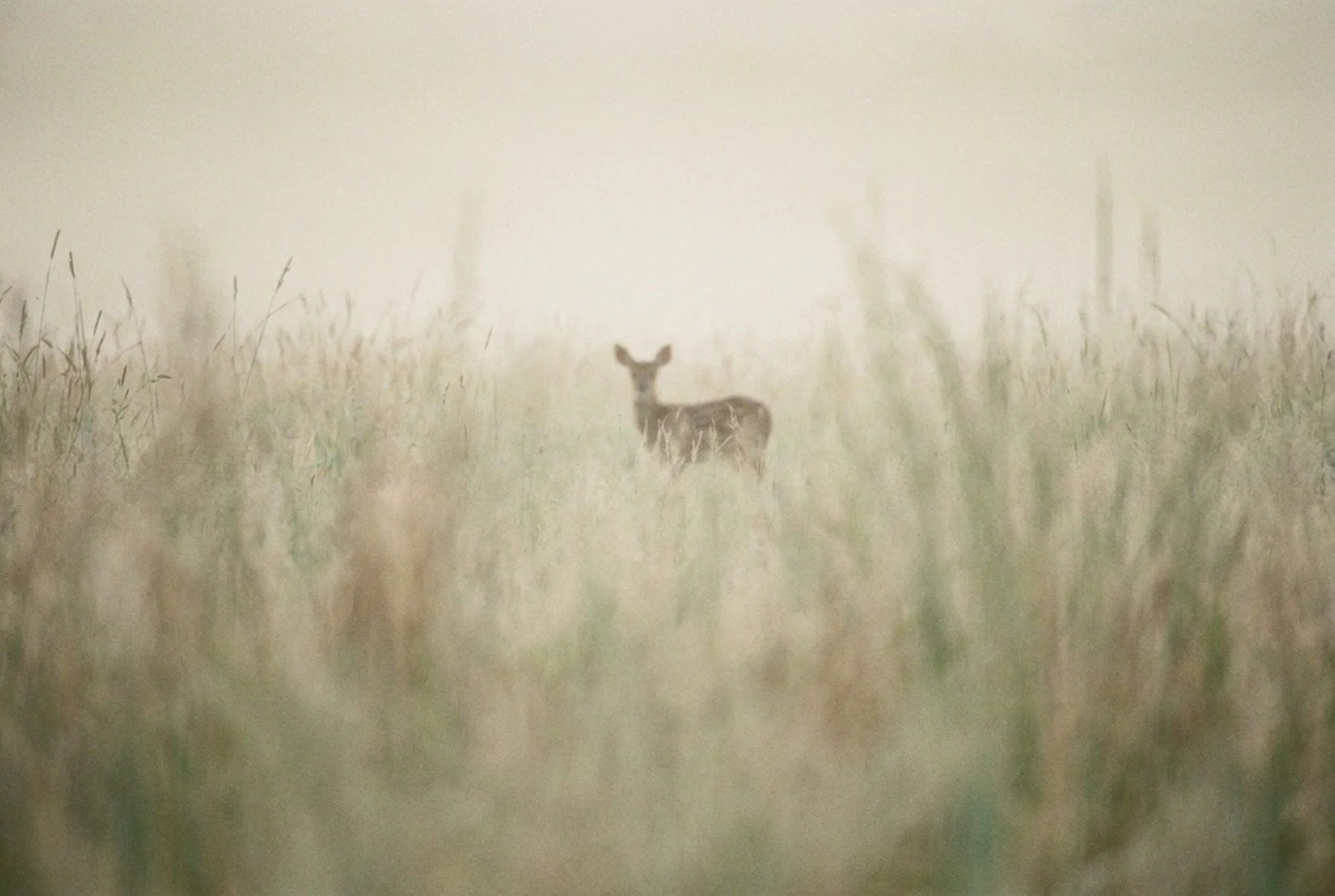
A fawn is a new thing in the world. It is the colour of the first hour of morning, before the light has decided what it is. It is soft without being fragile; it will grow into something with speed and certainty. But in the moment the word names, it is new, and it is paying close attention to what surrounds it.
The press makes books about lives that are already in progress — parents, grandparents, long marriages, the people who have been here long enough to have acquired a small library of stories the family tells. But the book itself is always new. It is the fawn part of the name: something that arrived recently and is paying attention. The studio's notes on a personalized book for adults and on a one-of-a-kind book both circle this same instinct in different language.
A note on colour
The studio's palette — cream, ochre, navy, the occasional deep red — has a fawn in it. Fawn the colour is a warm pale brown, the shade of an unbleached page, the inside of a good envelope. The interior pages of every book are this colour. The name was not chosen for the palette, but the palette has, over time, leaned into the name.
A note on the animal
There is no fawn on the cover of any sundayfawn book. The studio has resisted the temptation. A fawn drawn into the colophon would turn the name into an illustration of itself — cute, on the nose, instantly dated. The name is meant to carry the fawn quality without depicting it. The studio's only mark is a small lowercase wordmark at the colophon, in the same foil as the cover. The reader is allowed to imagine the rest. A name should be a door into a thing, not a picture of it; pictures age faster than doors.
Why the lowercase
The lowercase is a decision that feels small and is not. Capitalisation signals authority and announcement. A capitalised name walks into the room and names itself loudly. The press did not want that. The press wanted a name that arrived the way the books arrive: quietly, in the ordinary mail, addressed in handwriting, containing something that matters.
Every sundayfawn book is lowercase in the same sense: it does not announce itself. It arrives. The recipient opens it. The title is on the cover in foil. Inside is a story about someone they love. That is the complete experience, and it does not require a capitalised name to frame it. The studio's commitment to edition-of-one publishing is, in some sense, an extension of the same instinct: small, specific, quiet.
What the twelve other names were
The list of twelve has been kept, in part as a curiosity and in part as a reminder. None of the names can be reproduced here — some are still in use by other small studios in adjacent fields — but the categories they fell into can. They are useful to anyone who has ever tried to name a small thing.
Three of the twelve were Latin or Greek borrowings, the kind of name that comes out of a thesaurus and sounds older than it is. They were rejected because the press is not pretending to a tradition it does not belong to. Two were puns on the word press itself, which were rejected because puns wear thin within a year. Four were proper nouns — a place, a season, a colour, an animal — each of them too narrow to hold the whole work. Two were single Anglo-Saxon syllables, which felt close but did not, in the end, carry enough. One was already taken. The twelfth was almost right; it lives in a notebook with a line through it.
What 'almost right' usually means
Almost right is the dangerous category in naming. It is right enough to be defended in a meeting and wrong enough that it never quite sits. The studio's instinct, refined over time, is to leave the almost-right name alone for a week and see whether it grows on the desk or fades from it. The names that grow are the ones to use. The name sundayfawn grew within a day. It has not faded since.
On the small ceremonies of naming a thing
Naming a press is not unlike writing a brief for a book. You have to decide what the thing actually is before you can name it correctly. The twelve names on the list that didn't work were all names for things the press was not. Some were too clever. Some were too neutral. A couple had the right tone but the wrong meaning. The name sundayfawn is a name for the thing it turned out to be: a literary press that makes one custom hardcover storybook at a time, for one person, in the quiet.
The studio recommends the same exercise to anyone trying to write a brief: do not start from what the thing will look like. Start from what the thing actually is. The name follows from the thing, not the other way around. If you want to see what the name produces, the order form is where a brief begins.
What the name has done since
A name, once chosen, does work that the people who chose it cannot fully predict. The lowercase has stayed lowercase. The two-word compound has stayed unsplit — nobody who has bought a book has ever written Sunday Fawn in correspondence; the join has held. The fawn colour has crept into the palette without anyone deciding it should. The Sunday register has set the tone for the writing more strongly than the studio expected.
This is what a name can do at its best: become a small set of constraints that quietly shape the work. The studio has, on at least three occasions, made an editorial decision by asking whether the choice would feel like a Sunday or not. The answers were always obvious in retrospect. A name that is doing its job behaves less like a label and more like a tuning fork. The note is faint, but it is consistent, and the studio is grateful for it.
- Sunday: the day of ordinary life, paid attention to.
- Fawn: new, soft, quietly observing.
- Lowercase: arriving without announcement.
- One word: because the press does one thing.
Common questions about the name
Q: Is sundayfawn a real word?
A: No. It is two words pressed together. Sunday and fawn have separate dictionary entries. sundayfawn is what happens when a press needs a name and finds that neither word alone is sufficient.
Q: How is sundayfawn pronounced?
A: Sunday-fawn. Two syllables each, stress on the first syllable of each word. It takes about the same amount of time to say as 'hardcover book', which is appropriate.
Q: Why does the press use its name in lowercase even at the start of a sentence?
A: This is a style choice, made deliberately, and consistent across all press materials. The word does not need a capital. The press does not need announcement.
Q: Does the name appear anywhere on the books themselves?
A: At the colophon, in small foil, alongside the edition number and the date of pressing. Not on the cover. The cover belongs to the named reader and the title. The name of the press sits at the back, where the studio belongs.
— The press is happy, in the end, to have been named what it is.